
- A patio fits flat or terraced ground. A deck fits raised doors and sloped yards.
- Pavers and composite decking both handle our wet climate with little upkeep.
- Many of the best backyards combine a deck and a paver patio.
In this article
A new patio or deck is one of the best ways to add usable outdoor living space. Both can hold a dining table, a grill and a seating area. But they are built very differently, and one usually fits a property better than the other.
Start with the site
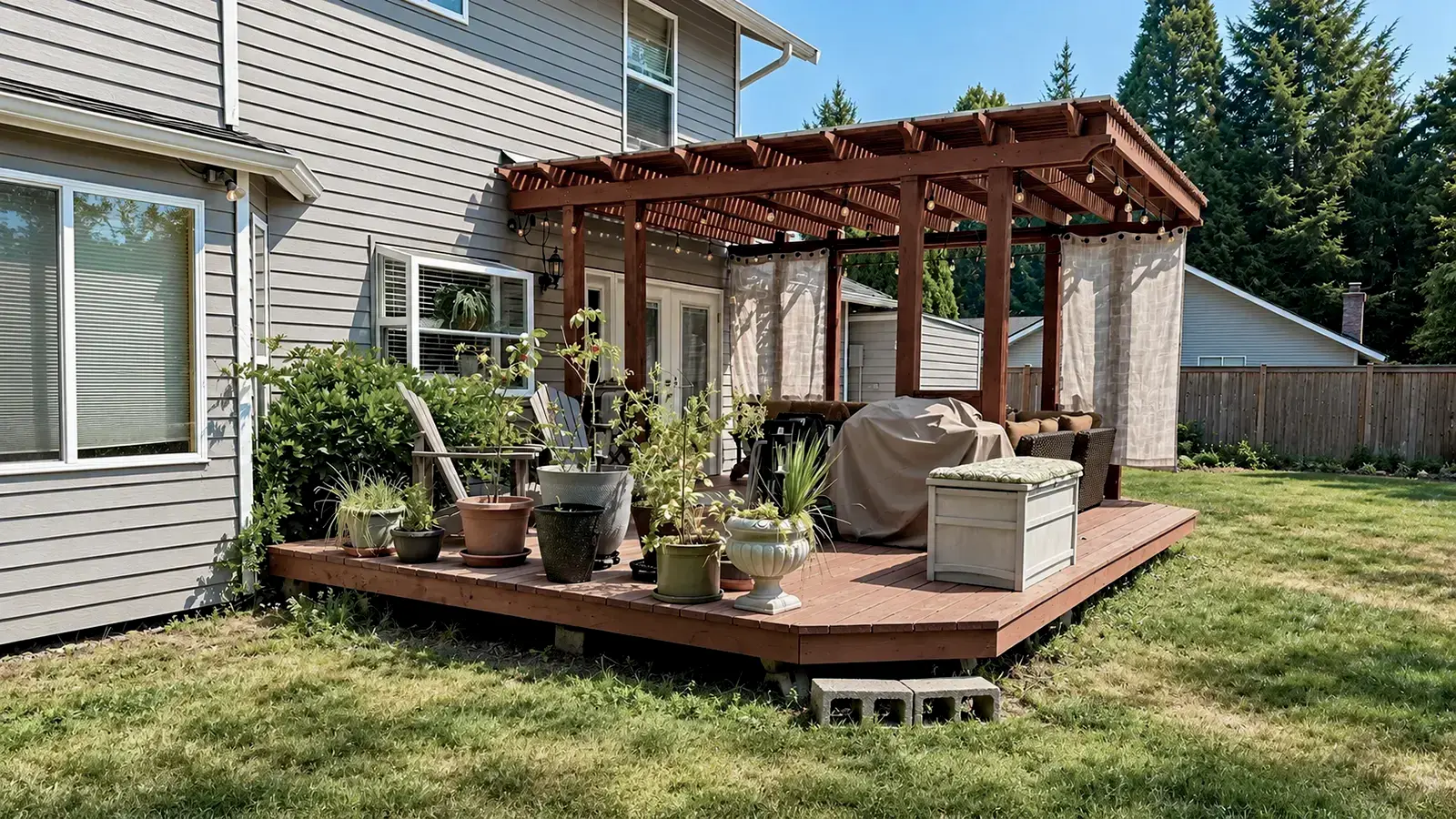
The shape of the yard often makes the decision. A paver patio is built on the ground, so it works best on flat or gently sloped areas, or where a retaining wall can create a level space. A deck is built on a frame and footings, so it is the natural choice when the back door is several feet above the yard or the ground falls away from the house.
If you have to step down more than a few steps from the door, a deck at door height usually feels more connected to the house. If the yard is level with the door, a patio keeps everything at one level.
Durability in a wet climate
Rain, shade and moss are hard on outdoor surfaces in Western Washington. Traditional wood decks need regular cleaning and sealing, and boards near the ground or in shade can rot over time. Composite decking resists rot and does not need staining, which is why many homeowners choose it when replacing an old wood deck.
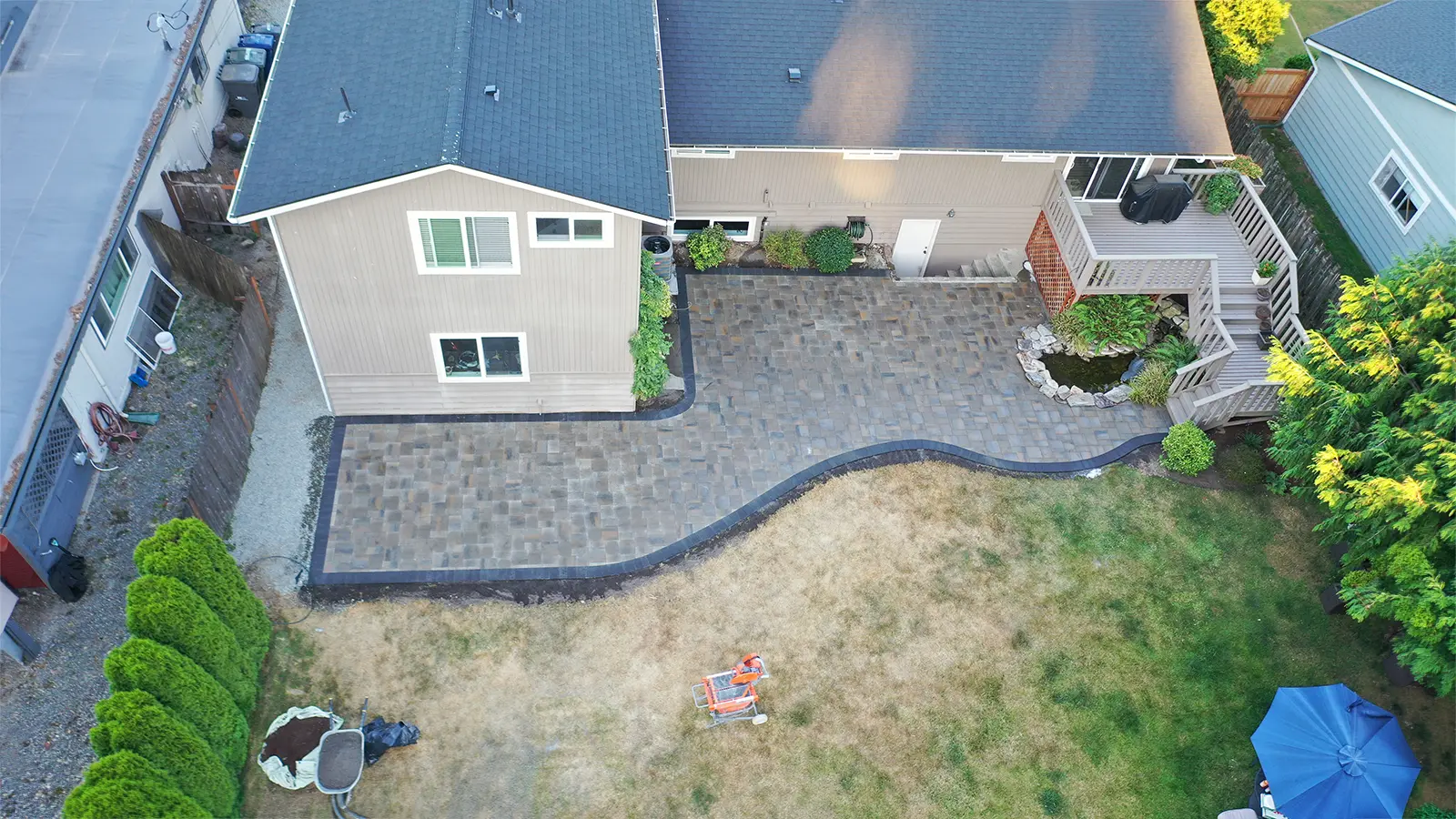
Pavers sit on a compacted gravel base and do not rot. With proper base preparation and slope for drainage, a paver patio handles our rainy seasons very well. Individual pavers can also be lifted and reset if an area ever needs repair.
If the yard is level with the door, a patio keeps everything at one level. If it drops away, a deck brings the yard up to you.
Acosta Landstone crew
Maintenance compared
- Wood deck: cleaning, staining or sealing every few years, and checking for loose boards and soft spots.
- Composite deck: periodic washing to remove dirt and mildew. No staining.
- Paver patio: occasional sweeping and washing, refreshing joint sand when needed and keeping weeds out of the joints.
Look and feel
Decks feel warm and natural and create a clear outdoor room off the house. Paver patios feel more like part of the landscape and are easy to connect to walkways, steps, fire pits and planting beds. Curved borders and color blends give pavers a lot of design flexibility.
Cost factors
Every project is priced after a site visit, because the main cost drivers are different for each. For patios: size, excavation, base depth, grading, drainage, steps and the paver selection. For decks: height, footings, framing, stairs, railings and the decking material. A low, ground-level deck and a paver patio can be closer in cost than many people expect.
| Paver patio | Wood deck | Composite deck | |
|---|---|---|---|
| Best site | Flat or terraced ground | Raised doors, sloped yards | Raised doors, sloped yards |
| Rot resistance | Does not rot | Needs care | High |
| Routine upkeep | Low | Highest | Low |
| Design flexibility | Shapes, borders, colors | Classic wood look | Many colors and borders |
| Repairs | Lift and reset pavers | Replace boards | Replace boards |
Why not both?
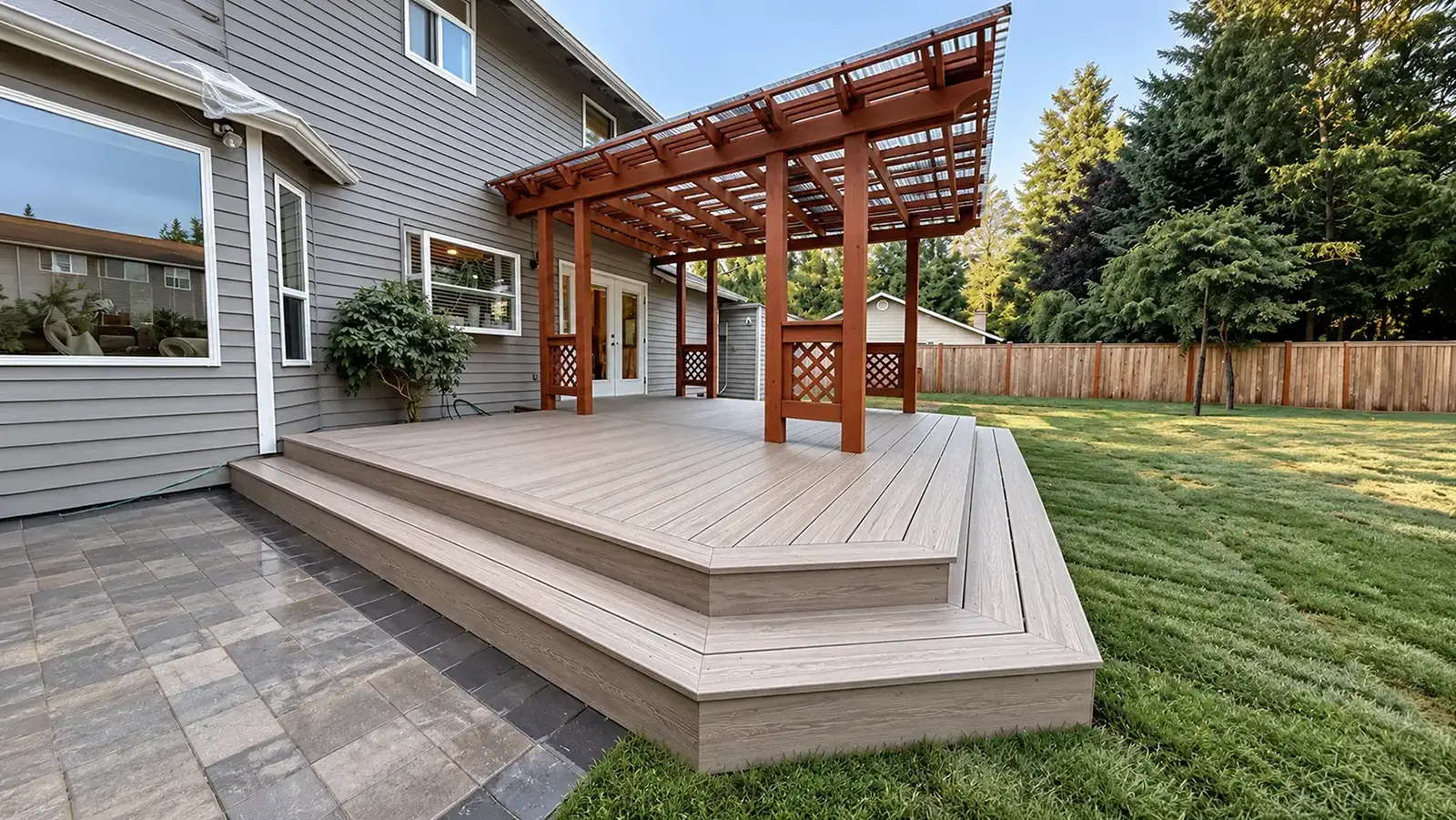
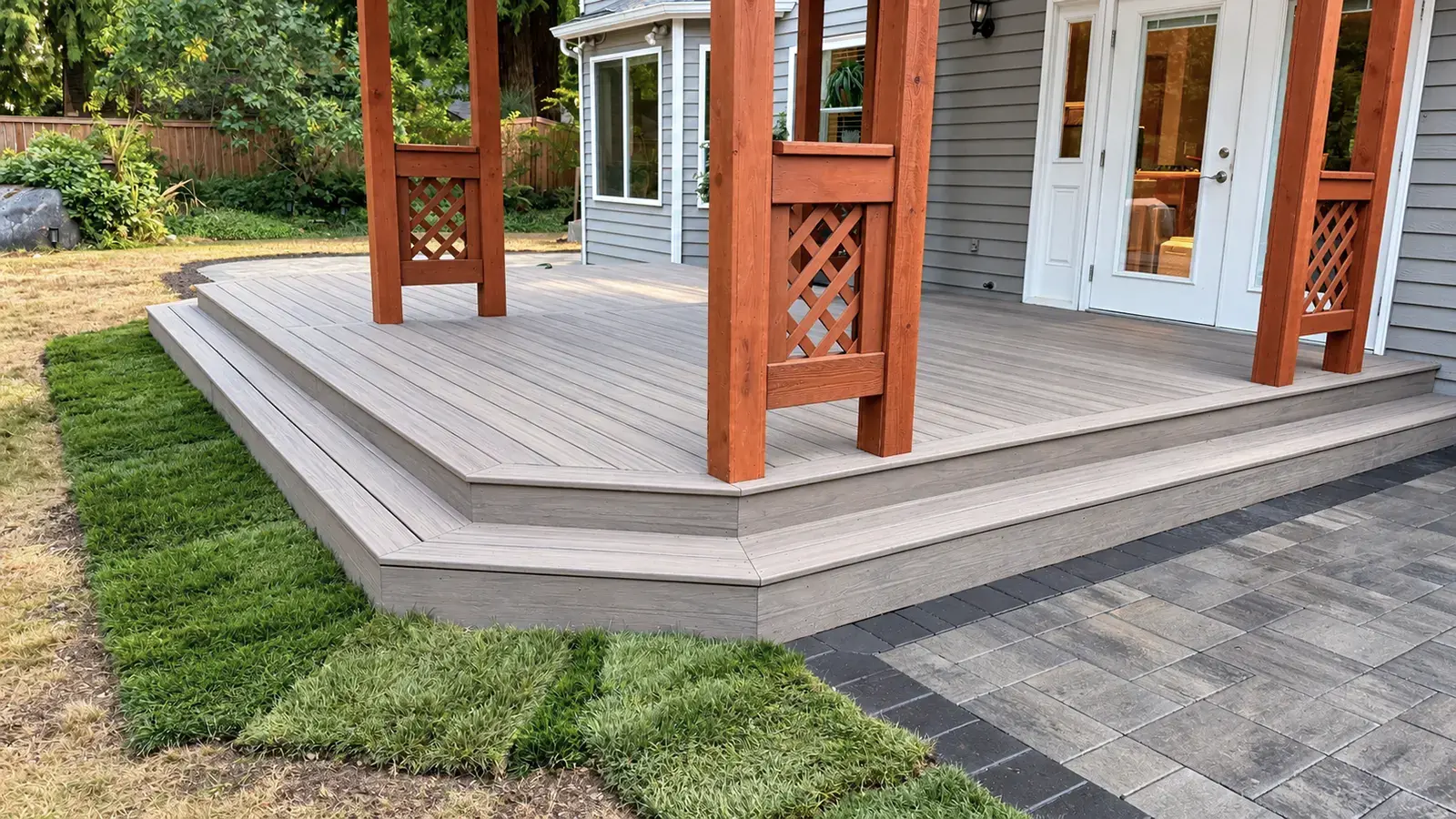
Some of the best backyards use both. In this Duvall project, a composite deck with a wood pergola steps down to a paver patio, so the space works from the back door all the way into the yard.
Frequently asked questions
Is a paver patio or a deck better for a sloped backyard?
A deck is usually better when the yard drops away from the house. A paver patio can still work on a slope if a retaining wall is used to create a level area.
Do composite decks hold up in Washington rain?
Yes. Composite decking resists rot and does not need staining. It should be washed periodically to remove dirt and mildew, especially in shaded areas.
Can you build a deck and a paver patio in the same project?
Yes. We often plan both together so the deck, steps and patio connect cleanly and drainage is handled as one system.