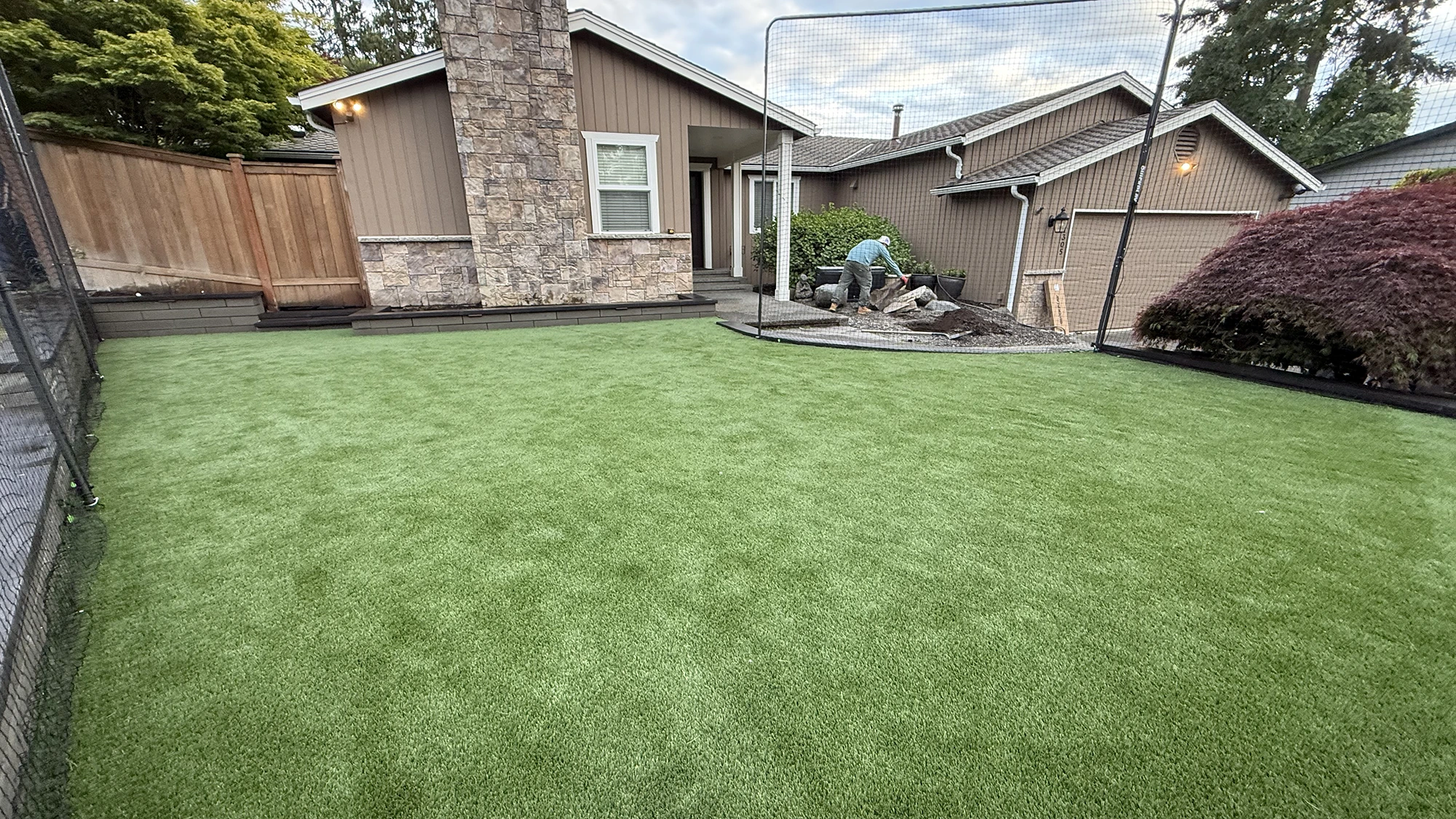
- Natural grass suits sunny, open yards and owners who enjoy lawn care.
- Artificial turf solves mud, moss, shade and dog traffic, and needs no mowing or watering.
- With turf, the drainage base underneath matters as much as the turf itself.
In this article
Few questions come up more often during our estimates than this one: should I replace my lawn with artificial turf, or start over with natural grass? Both can look great in a Pacific Northwest yard. The right choice depends on how you use the space, how much sun and water it gets, and how much time you want to spend on upkeep.
The short answer
Choose natural grass if you have a sunny, open yard, you enjoy lawn care, and you want the cooling, soft feel of a real lawn. Choose artificial turf if the area stays muddy, gets heavy foot or dog traffic, sits in shade where grass struggles, or you simply want a green yard without mowing, watering and reseeding.
How each one handles our climate
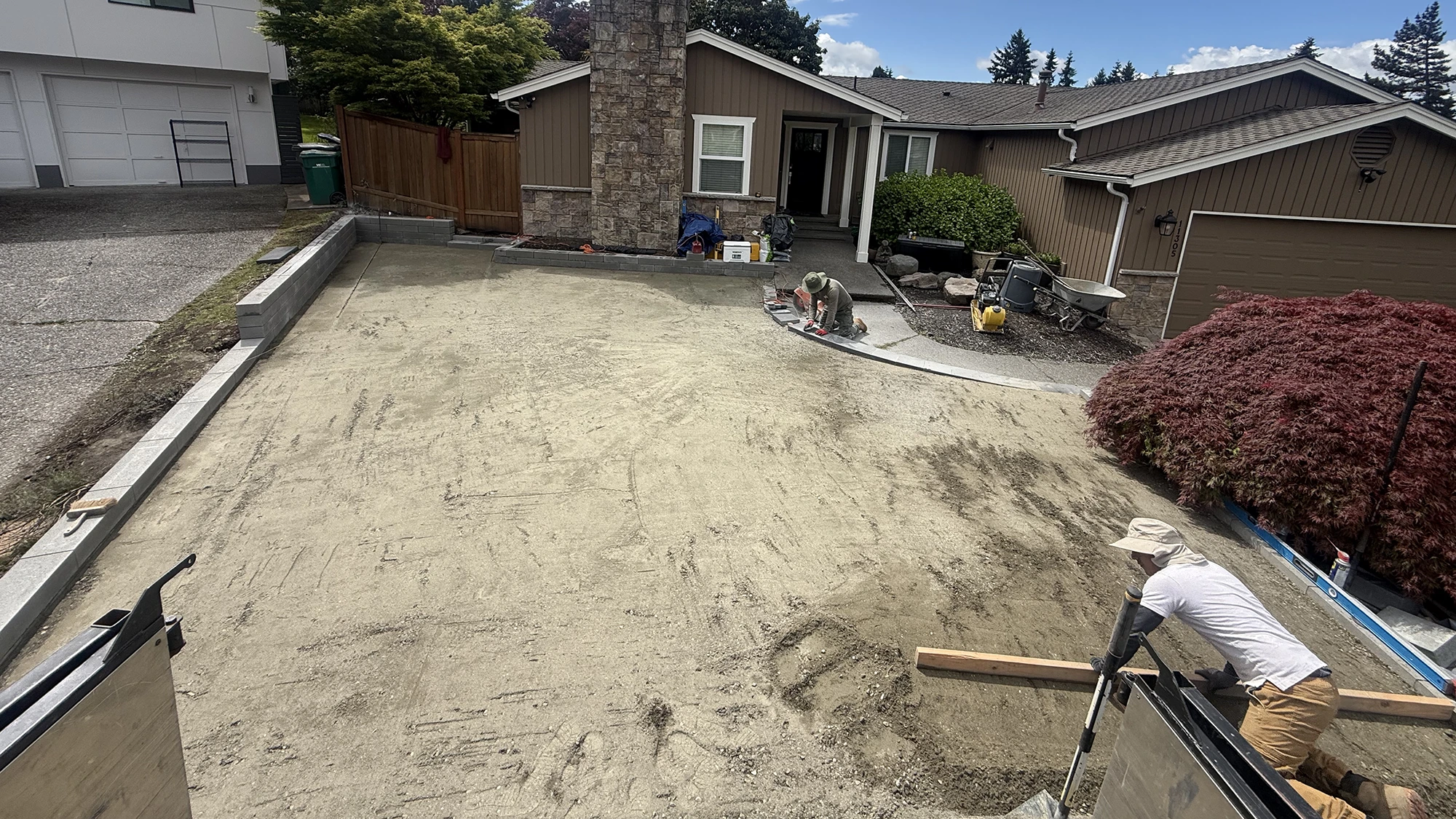
Western Washington gives lawns two very different seasons. From fall to spring, steady rain and low light make many lawns thin, mossy and muddy, especially in shaded or compacted areas. In summer, a natural lawn needs regular irrigation to stay green through the dry months.
Artificial turf stays the same color all year. The key is what is underneath it: a properly excavated and compacted base lets rainwater drain through the turf instead of pooling on top. When the base is done right, a turf yard is usable the day after a storm.
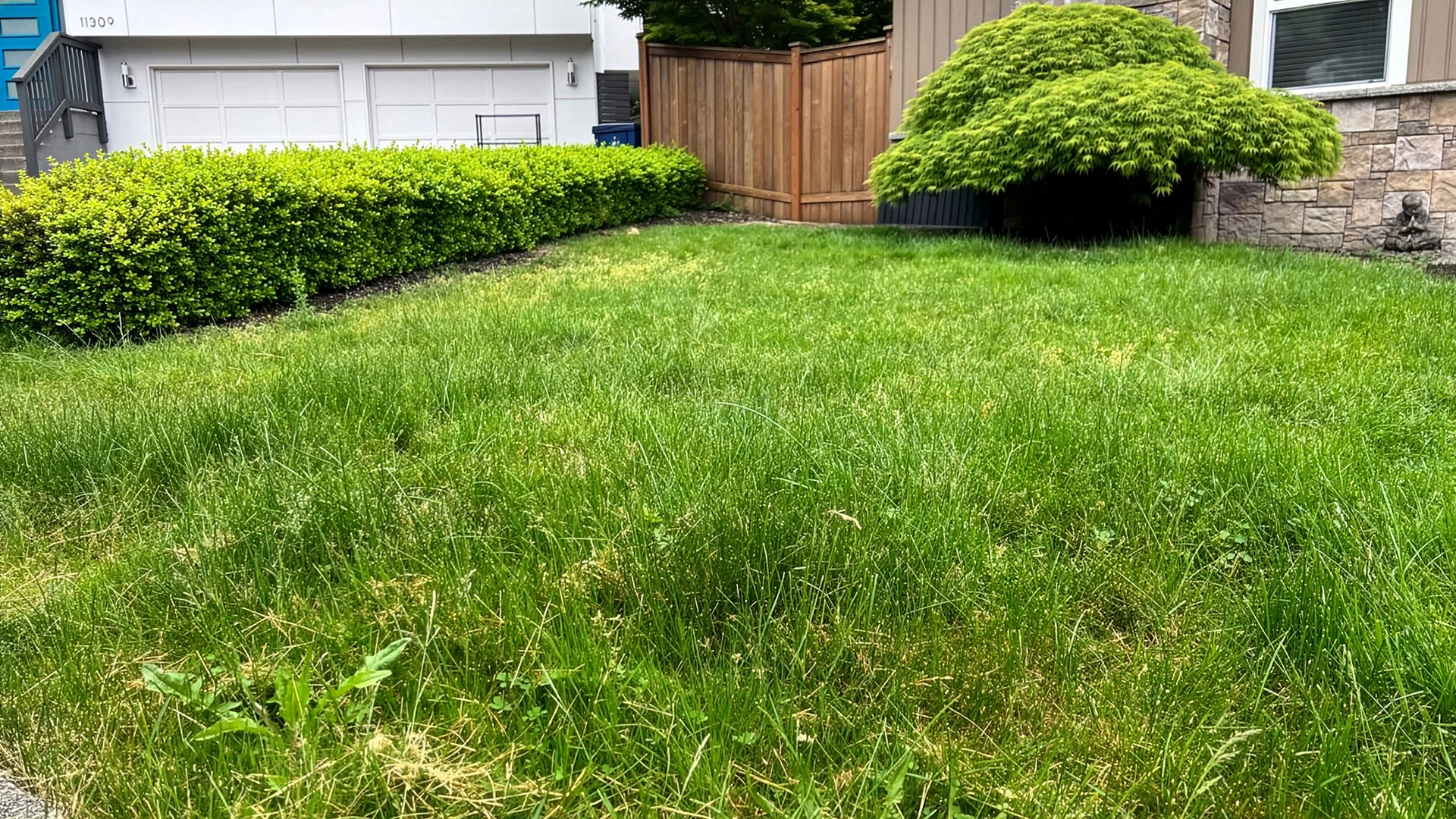
A turf yard is mostly base work. When the base is done right, it is usable the day after a storm.
Acosta Landstone crew
Maintenance compared
- Natural grass: mowing, edging, fertilizing, aerating, overseeding and summer watering. Moss control is common in shaded yards.
- Artificial turf: occasional brushing to keep the fibers upright, blowing off leaves and debris, and rinsing pet areas. No mowing or watering.
Turf is low maintenance, not zero maintenance. A quick routine keeps it looking fresh for many years.
Kids, pets and everyday use
Natural grass is soft and cool underfoot, but high-traffic areas wear into bare spots and mud, especially where dogs run the same path every day. Pet-friendly artificial turf is built for that kind of use: a draining base, turf made for pets and a layout that makes rinsing simple. Many homeowners combine both, with turf in the dog run or play area and natural lawn where it grows well.
What a turf installation involves
A good turf yard is mostly base work. On a typical project we remove the old lawn and soil, excavate to the right depth, install and compact a gravel base, set clean borders and then lay, seam and secure the turf. The borders keep the edges straight next to patios, beds and walkways.
Cost factors to consider
We do not publish flat prices because every yard is different. For both options, the estimate depends on the size of the area, site access, how much old material has to be removed, grading and drainage needs, and edge details. Natural grass usually costs less to install but more to maintain over time. Artificial turf costs more up front and much less in water and upkeep afterwards.
| Natural grass | Artificial turf | |
|---|---|---|
| Year-round look | Varies by season | Consistent |
| Summer watering | Needed | Not needed |
| Mowing and fertilizing | Regular | None |
| Muddy winter areas | Common in shade and traffic | Drains through the base |
| Feel underfoot | Soft and cool | Soft, can get warm in full sun |
| Best for | Sunny, open yards | Shade, pets, play areas, small yards |
Our recommendation
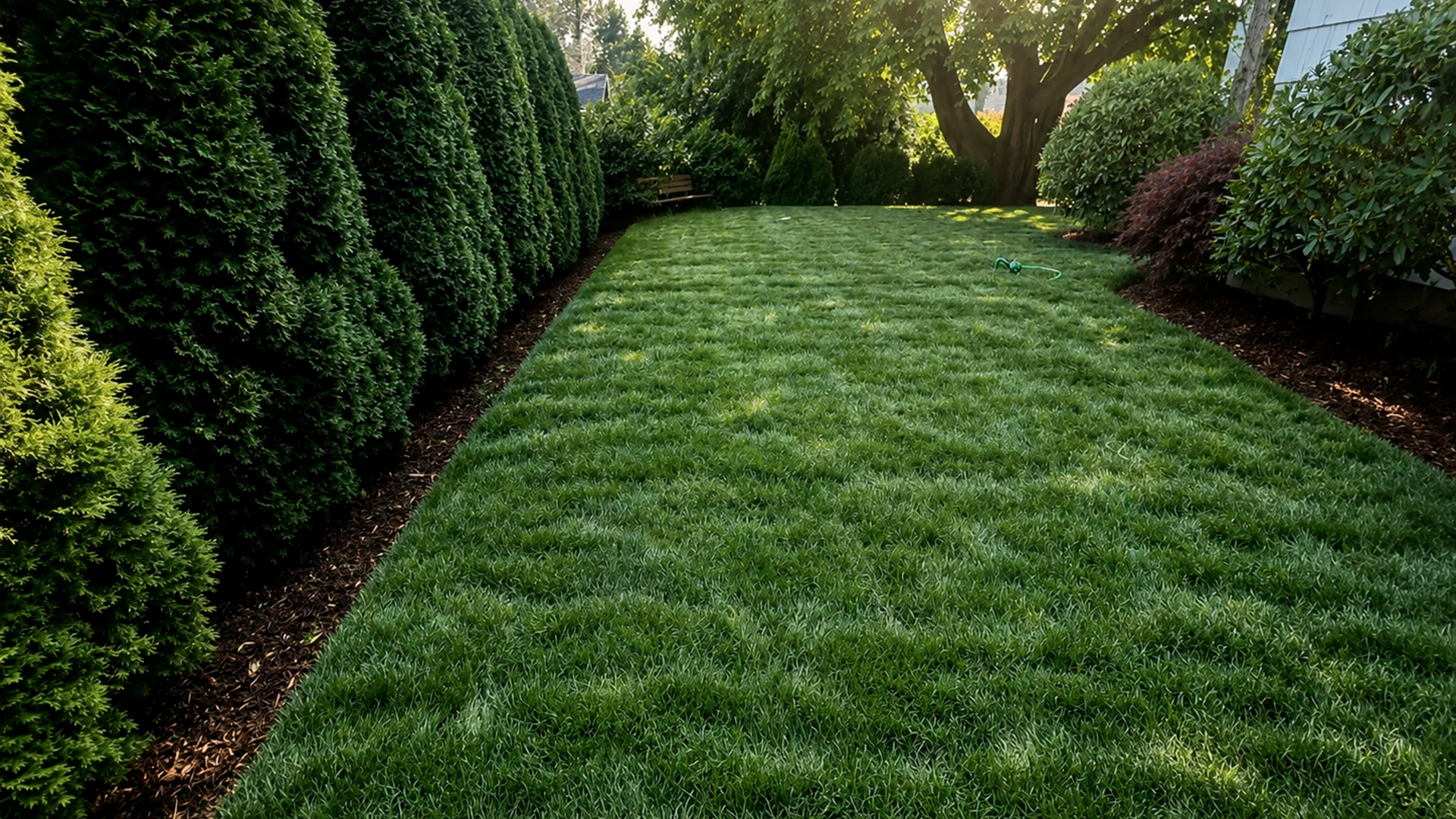
Look at how the yard performs today. If grass already grows well and you enjoy caring for it, a renovated natural lawn is a great investment. If you are fighting mud, moss and bare spots every winter, artificial turf with a proper base usually solves the problem for good. During the free estimate we look at sun, drainage and how you use the space before recommending either one.
Frequently asked questions
Does artificial turf drain well in the Pacific Northwest rain?
Yes, when it is installed over a properly excavated and compacted gravel base. Water passes through the turf backing and drains through the base instead of pooling on the surface.
Is artificial turf good for dogs?
Pet turf works well for dogs when it has a draining base and is rinsed regularly. It removes the mud and worn paths that dogs create in natural lawns.
Can I have both natural grass and artificial turf?
Yes. Many yards use turf in shaded, high-traffic or pet areas and natural grass in the sunny parts of the yard, with clean borders between them.