
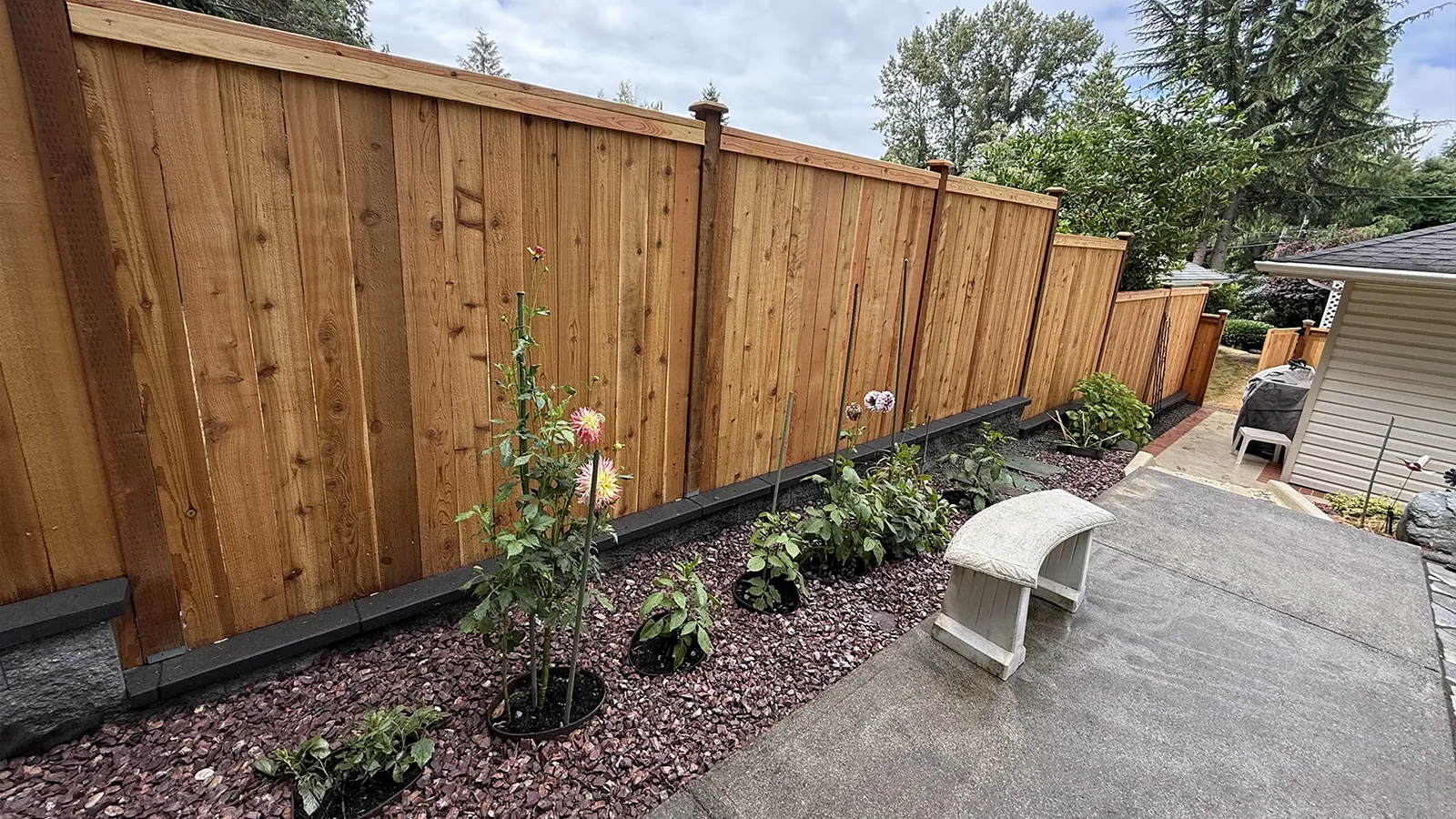
- Cedar and wood give full privacy and a natural look, with staining every few years.
- Vinyl is low upkeep but less natural and harder to customize.
- Aluminum is open and decorative, not a privacy fence.
In this article
A new fence changes how a yard feels: more private, more secure and more finished. The material you choose affects the look, the upkeep and how the fence ages through our wet winters. Here is how wood, vinyl and aluminum compare.
Wood fences (especially cedar)
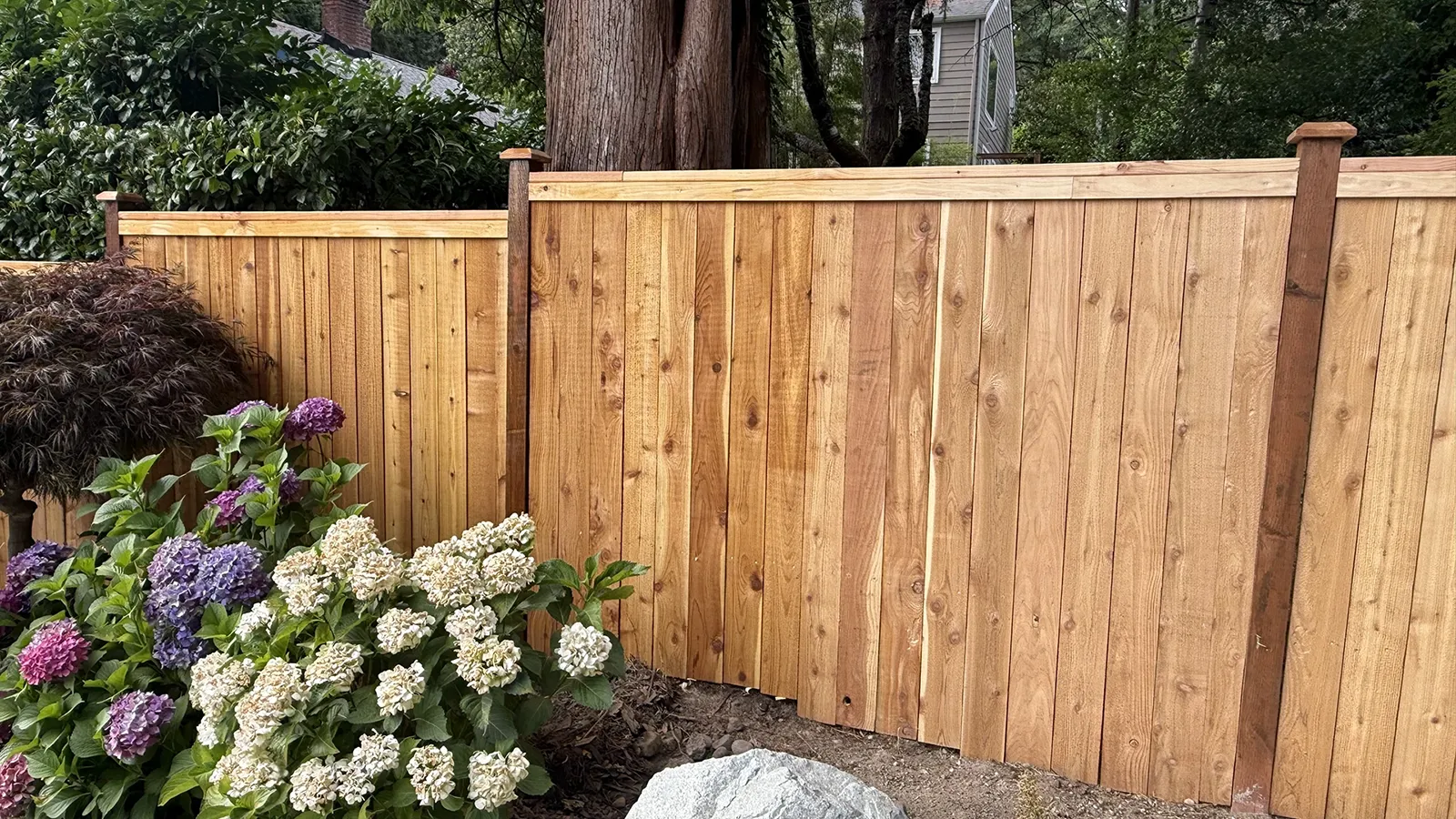
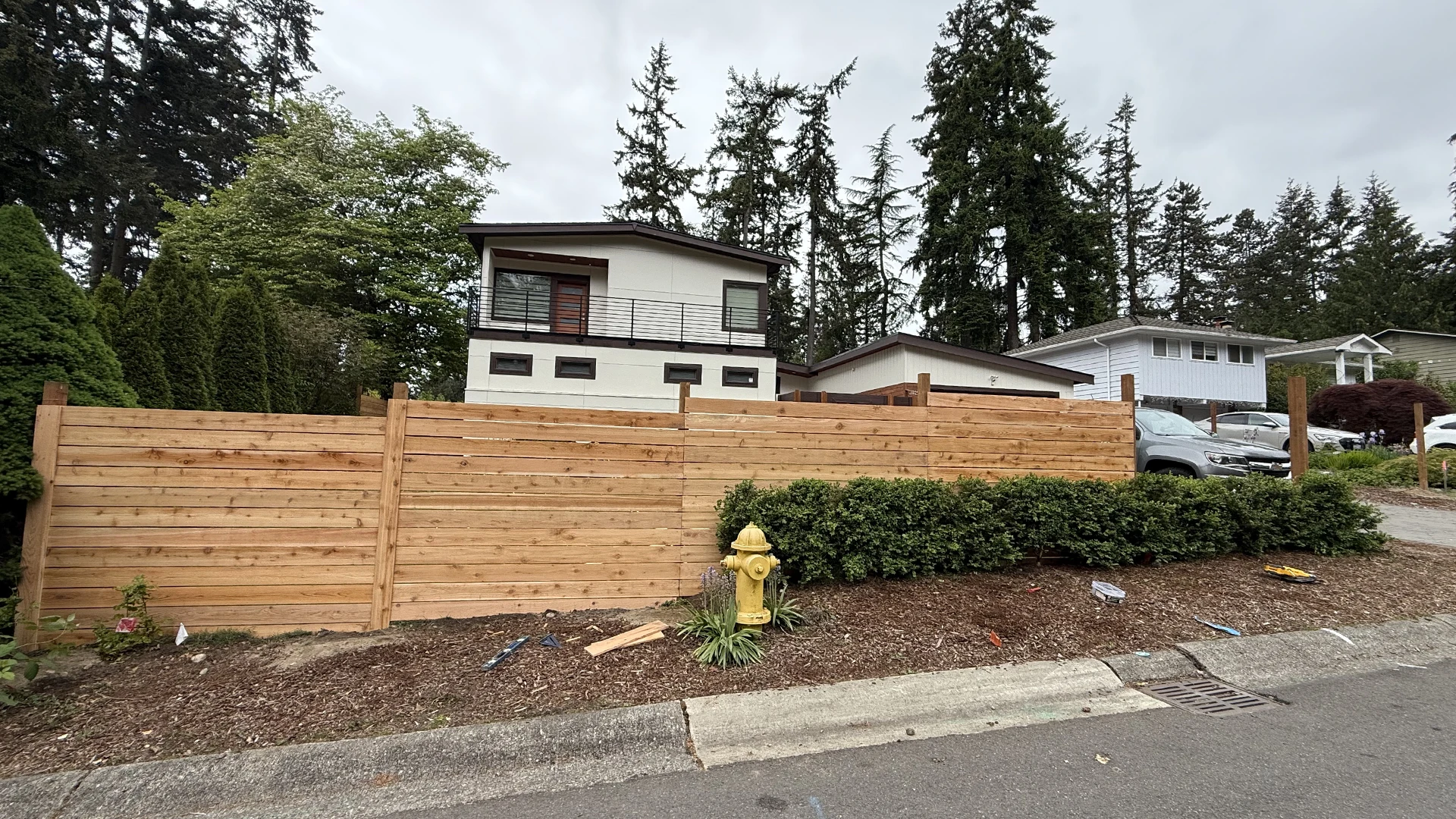
Wood is the most popular fence material in the Pacific Northwest, and cedar is the local favorite. It gives full privacy, fits naturally with trees and planting, and can be built in many styles: vertical boards, horizontal boards, lattice tops, caps and trim, and matching gates.
Cedar resists rot better than many other woods, but it still needs care. Cleaning and staining or sealing every few years keeps the color and protects the boards. Post installation matters most: well-set posts and good drainage at the base help a wood fence stay straight for years.
Vinyl fences
Vinyl fences are made from PVC panels. They do not rot or need painting, and they offer good privacy. The tradeoffs are a less natural look, fewer custom style options and repairs that usually mean replacing a full panel. In shaded, damp areas, vinyl can collect mildew and needs periodic washing.
Post installation matters most: well-set posts and good drainage keep a fence straight for years.
Acosta Landstone crew
Aluminum fences
Aluminum fences are open, ornamental fences. They do not rust, need very little maintenance and keep views open, which makes them popular around front yards, pools and gardens. They are not a privacy fence, so they are rarely the answer for a backyard that needs screening from neighbors.
Side-by-side comparison
| Wood / cedar | Vinyl | Aluminum | |
|---|---|---|---|
| Privacy | Full | Full | Open, decorative |
| Look | Natural, warm | Clean, uniform | Light, ornamental |
| Maintenance | Stain or seal every few years | Washing | Very low |
| Custom styles | Many | Limited | Moderate |
| Repairs | Replace individual boards | Replace panels | Replace sections |
| Best for | Backyard privacy, natural yards | Low-upkeep privacy | Front yards, pools, views |
What we build most
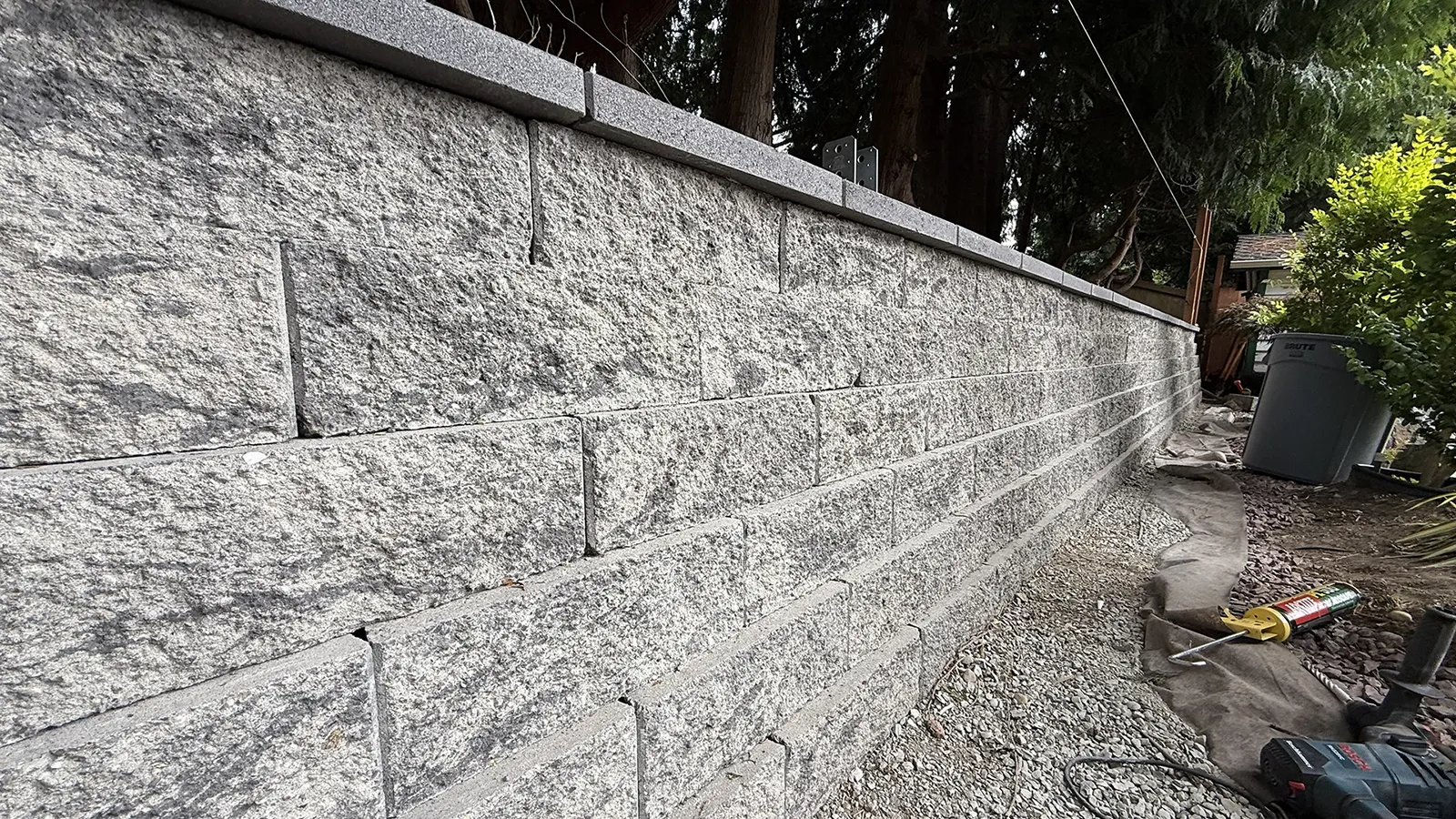
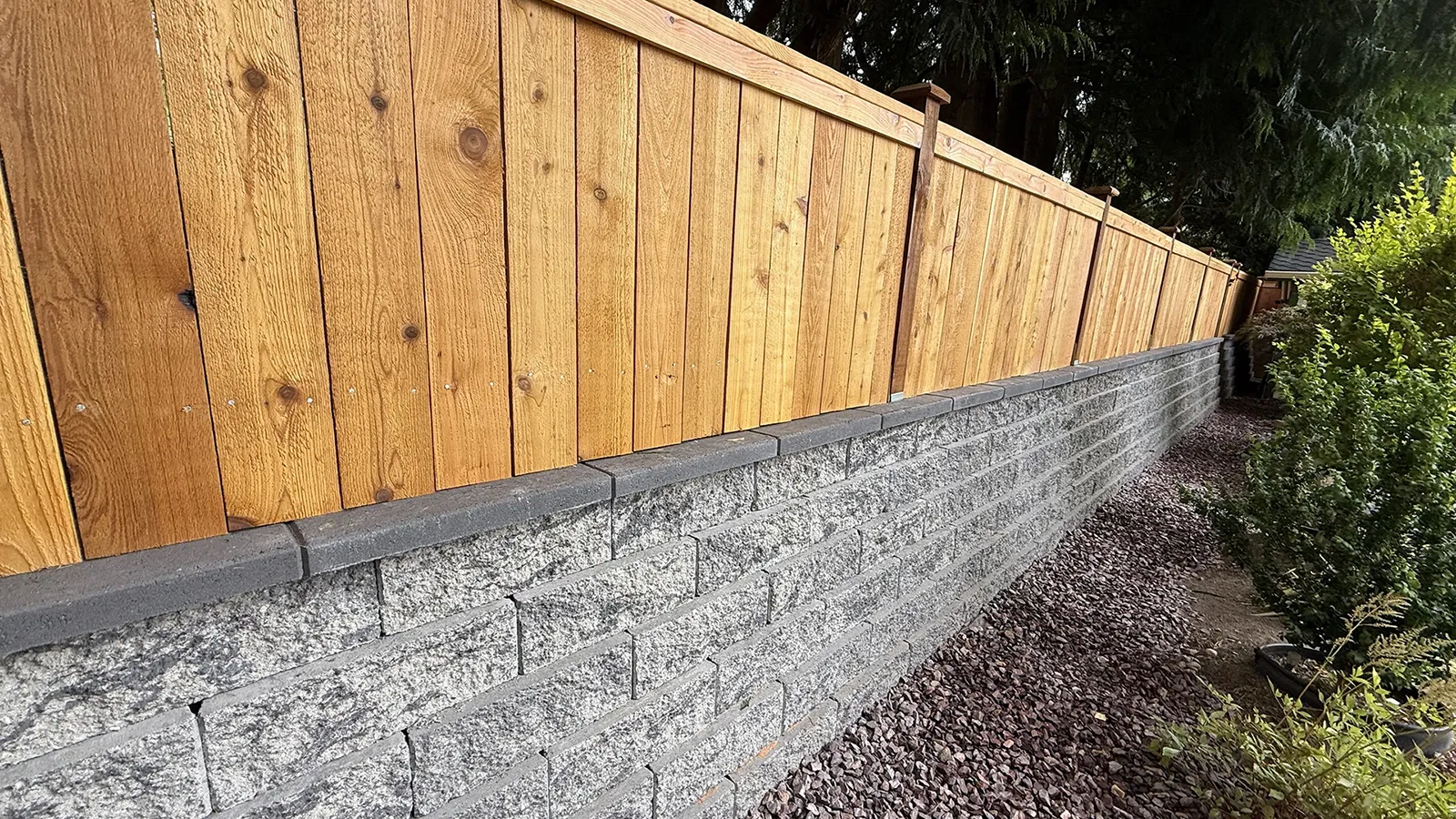
Most of the fences we install are cedar and wood privacy fences, often with matching gates, and sometimes on top of a new retaining wall on sloped lots. If you are considering another material, tell us during the estimate and we will talk through what fits your property and budget.
Before you build
- Confirm your property lines. A survey avoids disputes with neighbors.
- Check your city and HOA rules for fence height, style and setbacks.
- Plan gates around how you actually move through the yard: mowers, bins and wheelbarrows.
- On sloped lots, decide between stepped panels and panels that follow the grade.
Frequently asked questions
What is the best fence material for privacy in Washington?
Cedar and wood fences are the most common choice for privacy in Western Washington. They give full screening, can be built in many styles and fit naturally into the landscape.
How often should a cedar fence be stained?
Most cedar fences benefit from cleaning and staining or sealing every few years. Sun exposure, shade and moisture all affect how often it is needed.
Can a fence be installed on top of a retaining wall?
Yes. When the wall and fence are planned together, the posts can be anchored properly into or behind the wall for a strong, clean result.